
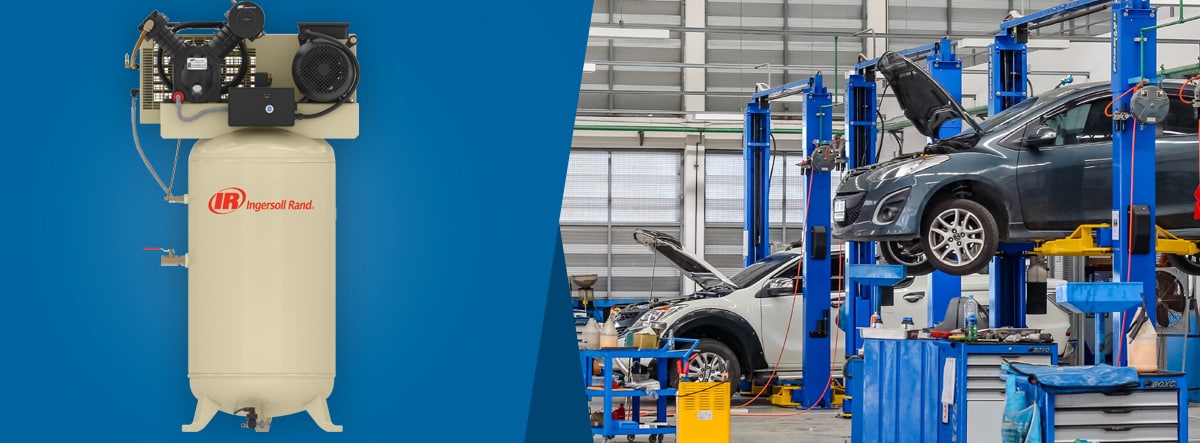
Two-Stage Air Compressor Buyer's Guide
How To Pick The Perfect Two-Stage Air Compressor

If you've ever worked in manufacturing or visited your local garage, you might have heard a rattling hum. That's the sound of power.
A two-stage air compressor to be more exact. To pick the perfect two-stage compressor, you've got to know what to look for.
Don't worry-we can help you pick the right 2-stage compressor for the job.
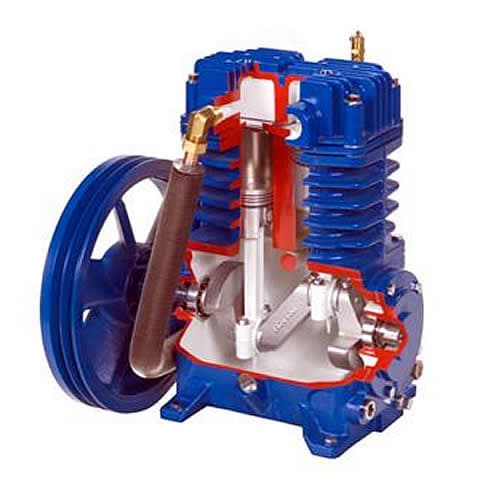
HP (Horsepower)
One Horsepower (hp) is the force needed to lift 550 lbs. one foot in one second. If you ask Tim "The Tool Man" Taylor, he'd invariably tell you, "It needs more power." The CFM (cubic feet per minute) the compressor can produce is most important.
Typically though, the more horsepower, the more power the compressor will have and the higher CFM it can produce. This isn't a muscle car so don't shop by horsepower. Shop by CFM needs instead.
CFM (Cubic Feet per Minute)
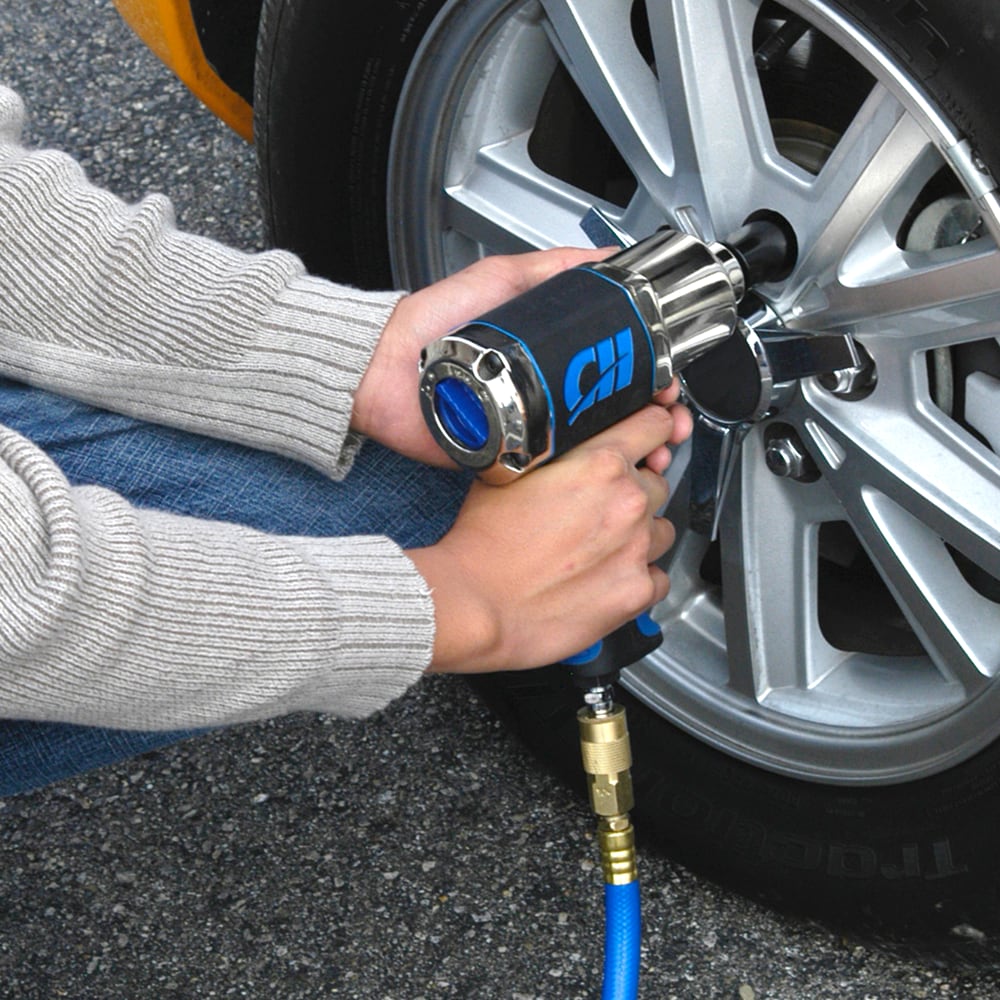
CFM is the most important factor in determining what air compressor works for you. Every air tool has a CFM requirement. The higher the CFM, the more air volume the tool uses.
Many garages will power multiple air tools off one air compressor. Regardless of how many tools you are running simultaneously, you will need to estimate how much CFM you will need to power at any given time.
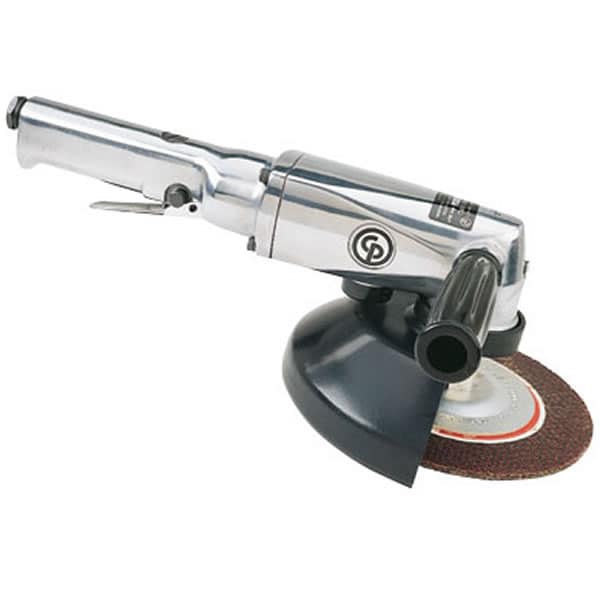
Total the CFM of tools in use and make sure the compressor can handle the workload. Tools that require constant power, such as grinders or sanders, will require more CFM than tools which need sporadic power, such as nail guns.
Voltage
The main difference in voltage and single vs. three-phase is where you will be using your compressor.
In a residential setting, you will be dealing with single phase.
Make sure you know what type of wiring you are dealing with before buying a compressor. With many different types available, you'll find one to fit your needs.
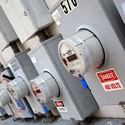
Three phase electricity is found mostly in industrial settings. Three phase power is considered more efficient and will result in less wear and tear on your motor. Voltage and phase vary by location so consult your local codes and electrician before purchasing.
Gallons
The size of the tank on a two-stage air compressor is measured in gallons. They can range from 60 - 200 gallons. The size of tank you need is predicated on the how often the compressor is in use.
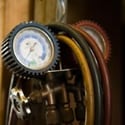
Start-stop air compressors run until the tank is full of compressed air. As you use air tools, the PSI from the tank is depleted. Once this reaches the low setting, the compressor turns back on and refills. If your compressor is starting and stopping too frequently you run the risk of overheating which can damage the pump.
Constant-run air compressors run 100% of the time but regulate the air output as needed.
Style
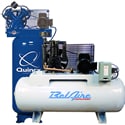
Two-stage air compressors come in two styles: horizontal or vertical.
Your space requirements or limitations will determine which style to buy. If you don't have a wide area to run one in, get a vertical compressor.
Likewise, if you are storing the compressor up high and have height limitations, choose a horizontal model. There is no difference in performance and utility of horizontal vs. vertical compressors of equal power. They are the same machines, just built in different styles.
 NEXT: Two-Stage Air Compressor Product Selector
Virtual Air Treatment - How to Get Clean, Treated Air Looking for ways to treat your compressed air? Whether you're using your compressor for applying a smooth coat of paint to an automobile or using it for powering air tools, air treatment is an important part of doing the job right. Looking for ways to treat your compressed air? Whether you're using your compressor for applying a smooth coat of paint to an automobile or using it for powering air tools, air treatment is an important part of doing the job right. Removing water and contaminants from your compressed air can prolong the life of your air tools and keep your paints clean and dry so they apply more smoothly. Browse our virtual air treatment guide for ideas on how you can improve the quality of your compressed air. View Our Virtual Air Treatment Guide |


Share My Personal Information\":{\"href\":\"https:\\\/\\\/ferguson.bigidprivacy.cloud\\\/consumer\\\/#\\\/dMf02ovZbN\\\/Form-NHWperWAaFNVIQK\",\"title\":\"Do Not Sell or Share My Personal Information\"}},\"About Us\":{\"Our Story\":{\"href\":\"https:\\\/\\\/www.powerequipmentdirect.com\\\/stories\\\/1982-How-We-Make-Buying-Technical-Products-Simple.html\",\"title\":\"Air Compressors Direct's Story\"},\"Careers\":{\"href\":\"https:\\\/\\\/www.powerequipmentdirect.com\\\/stories\\\/1924-Job-Openings.html\",\"title\":\"Careers @ Power Equipment Direct\"},\"Newsroom\":{\"href\":\"newsreleases.php\",\"title\":\"Air Compressors Direct News Center\"}},\"Contact Us\":{\"phone\":\"866-437-8002\",\"hours\":[\"M-F: 8-5 CST\",\"Sat: Closed\",\"Sun: Closed\"]}}","storeLinkJSON":"{\"AC Wholesalers\":{\"href\":\"https:\\\/\\\/www.acwholesalers.com\",\"title\":\"AC Wholesalers\"},\"Air Compressors Direct\":{\"href\":\"https:\\\/\\\/www.aircompressorsdirect.com\",\"title\":\"Air Compressors Direct\"},\"Chain Saws Direct\":{\"href\":\"https:\\\/\\\/www.chainsawsdirect.com\",\"title\":\"Chain Saws Direct\"},\"Chippers Direct\":{\"href\":\"https:\\\/\\\/www.chippersdirect.com\",\"title\":\"Chippers Direct\"},\"eComfort\":{\"href\":\"https:\\\/\\\/www.ecomfort.com\",\"title\":\"eComfort\"},\"Electric Generators Direct\":{\"href\":\"https:\\\/\\\/www.electricgeneratorsdirect.com\",\"title\":\"Electric Generators Direct\"},\"Leaf Blowers Direct\":{\"href\":\"https:\\\/\\\/www.leafblowersdirect.com\",\"title\":\"Leaf Blowers Direct\"},\"Log Splitters Direct\":{\"href\":\"https:\\\/\\\/www.logsplittersdirect.com\",\"title\":\"Log Splitters Direct\"},\"Mowers Direct\":{\"href\":\"https:\\\/\\\/www.mowersdirect.com\",\"title\":\"Mowers Direct\"},\"Power Equipment Direct\":{\"href\":\"https:\\\/\\\/www.powerequipmentdirect.com\",\"title\":\"Power Equipment Direct\"},\"Pressure Washers Direct\":{\"href\":\"https:\\\/\\\/www.pressurewashersdirect.com\",\"title\":\"Pressure Washers Direct\"},\"Snow Blowers Direct\":{\"href\":\"https:\\\/\\\/www.snowblowersdirect.com\",\"title\":\"Snow Blowers Direct\"},\"String Trimmers Direct\":{\"href\":\"https:\\\/\\\/www.stringtrimmersdirect.com\",\"title\":\"String Trimmers Direct\"},\"Sump Pumps Direct\":{\"href\":\"https:\\\/\\\/www.sumppumpsdirect.com\",\"title\":\"Sump Pumps Direct\"},\"Tillers Direct\":{\"href\":\"https:\\\/\\\/www.tillersdirect.com\",\"title\":\"Tillers Direct\"},\"Water Pumps Direct\":{\"href\":\"https:\\\/\\\/www.waterpumpsdirect.com\",\"title\":\"Water Pumps Direct\"}}","socialLinkJSON":"{\"Facebook\":{\"href\":\"https:\\\/\\\/www.facebook.com\\\/AirCompressorsDirect\",\"icon\":\"icon-facebook\",\"title\":\"Facebook\"},\"Twitter\":{\"href\":\"http:\\\/\\\/twitter.com\\\/aircompressors\",\"icon\":\"icon-twitter\",\"title\":\"Twitter\"},\"Pinterest\":{\"href\":\"http:\\\/\\\/pinterest.com\\\/AirCompressorsD\\\/\",\"icon\":\"icon-pinterest\",\"title\":\"Pinterest\"},\"YouTube\":{\"href\":\"http:\\\/\\\/www.youtube.com\\\/AirCompressorsDirect\",\"icon\":\"icon-youtube\",\"title\":\"YouTube\"},\"Instagram\":{\"href\":\"https:\\\/\\\/www.instagram.com\\\/powerequipmentdirect\\\/\",\"icon\":\"icon-instagram\",\"title\":\"Instagram\"},\"LinkedIn\":{\"href\":\"https:\\\/\\\/www.linkedin.com\\\/company\\\/power-equipment-direct\\\/\",\"icon\":\"icon-linkedin\",\"title\":\"LinkedIn\"}}","miscLinkJSON":"{\"Terms of Use\":{\"href\":\"terms-of-use.php\",\"title\":\"Terms of Use\"},\"Privacy Policy & Security\":{\"href\":\"privacy.php\",\"title\":\"Privacy Policy and Security\"},\"Cookie Policy\":{\"href\":\"privacy.php#cookiePolicy\",\"title\":\"Cookie Policy\"},\"CA Privacy Rights\":{\"href\":\"privacy.php#californiaPrivacyRights\",\"title\":\"CA Privacy Rights\"},\"copyright\":\"© 2024 Power Equipment Direct. All Rights Reserved\"}","checkoutMiscLinkJSON":"{\"Privacy Policy & Security\":{\"href\":\"privacy.php\",\"title\":\"Privacy Policy and Security\"},\"Cookie Policy\":{\"href\":\"privacy.php#cookiePolicy\",\"title\":\"Cookie Policy\"},\"Terms of Use\":{\"href\":\"terms-of-use.php\",\"title\":\"Terms of Use\"},\"copyright\":\"© 2024 Power Equipment Direct. All Rights Reserved\"}","expertJSON":{"imageURL":"https:\/\/www.powerequipmentdirect.com\/images\/experts\/expert-main-1.png?v=1","href":"\/air-compressor-product-expert.php","title":"Contact Melissa @ Air Compressors Direct","expertName":"Melissa","expertTitle":"Air Compressor Expert"},"bbbJSON":{"imageURL":"https:\/\/www.powerequipmentdirect.com\/images\/badge-bbb.png","imageAlt":"Better Business Bureau","href":"http:\/\/www.bbb.org\/chicago\/business-reviews\/industrial-equipment-and-supplies\/power-equipment-direct-in-bolingbrook-il-57001088","title":"Air Compressors Direct - A+ Rating - Better Business Bureau"},"zipCode":null,"phoneNumber":"866-437-8002","loginToken":"page cache precludes the use of csrf tokens","iterable":"e4b27e68b9c84fbb940829a0a9ee29d7","newNav":false}